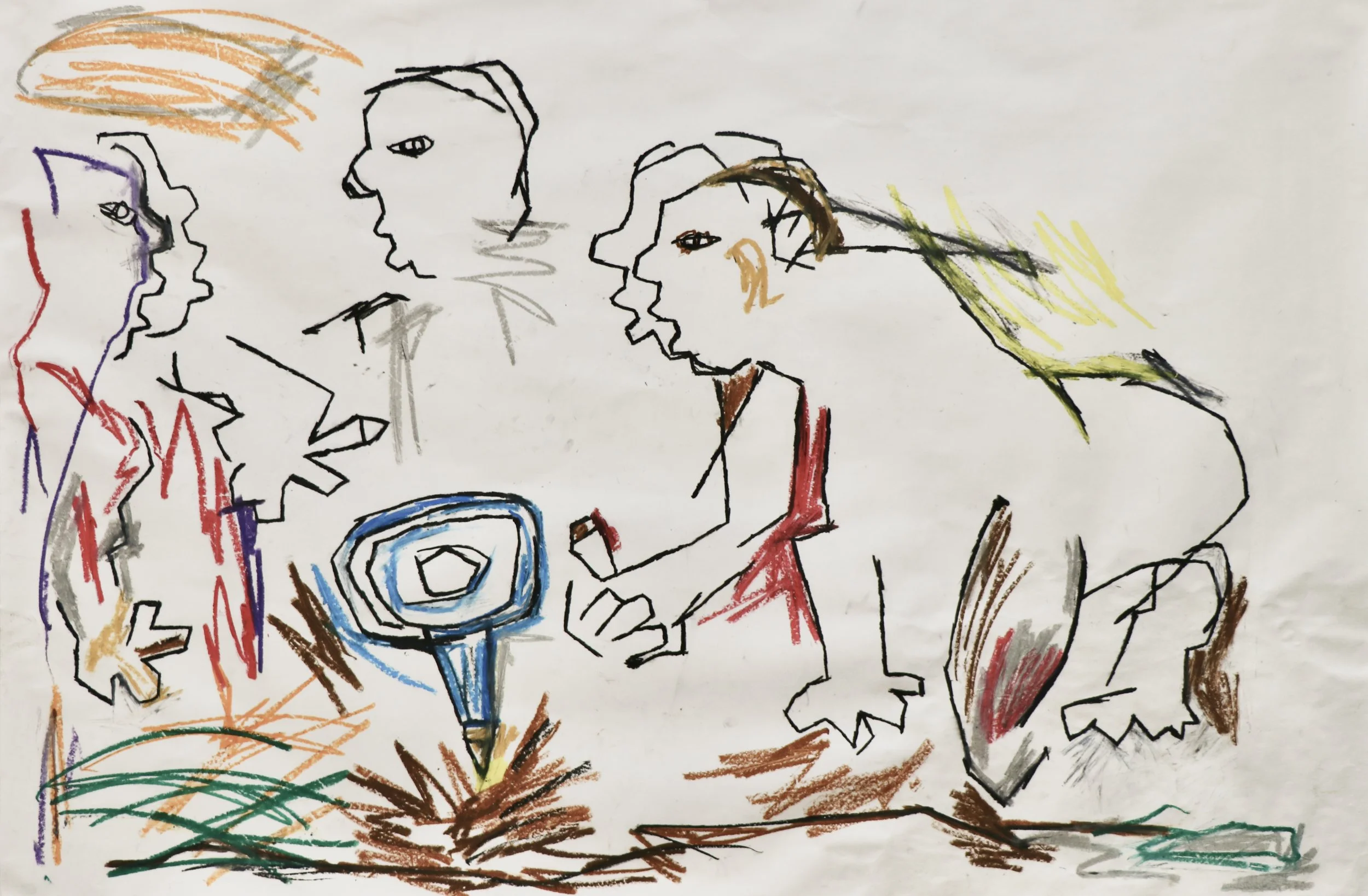
Alikoto 2025
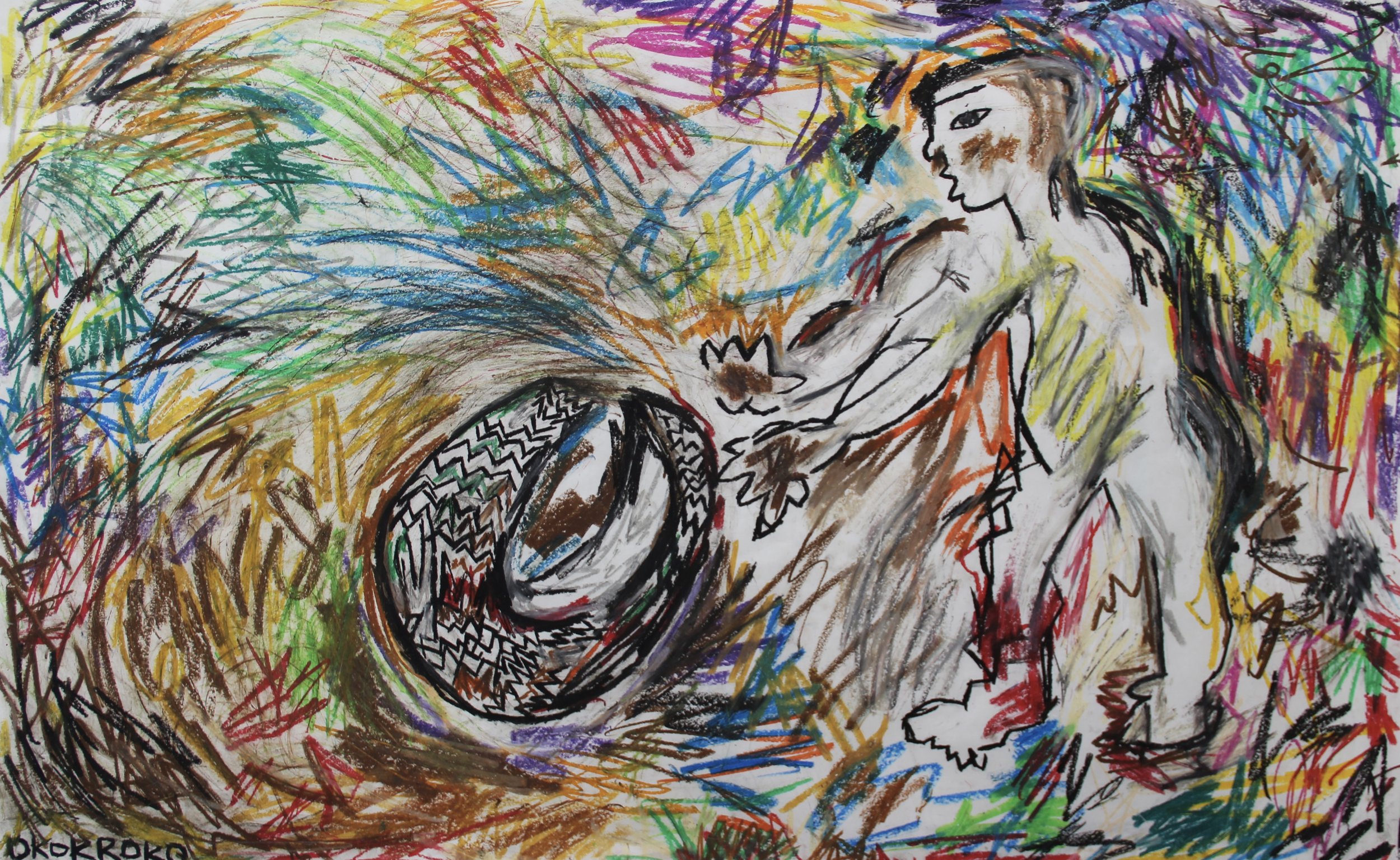
Lorry Tyre 190 x 120cm 2025
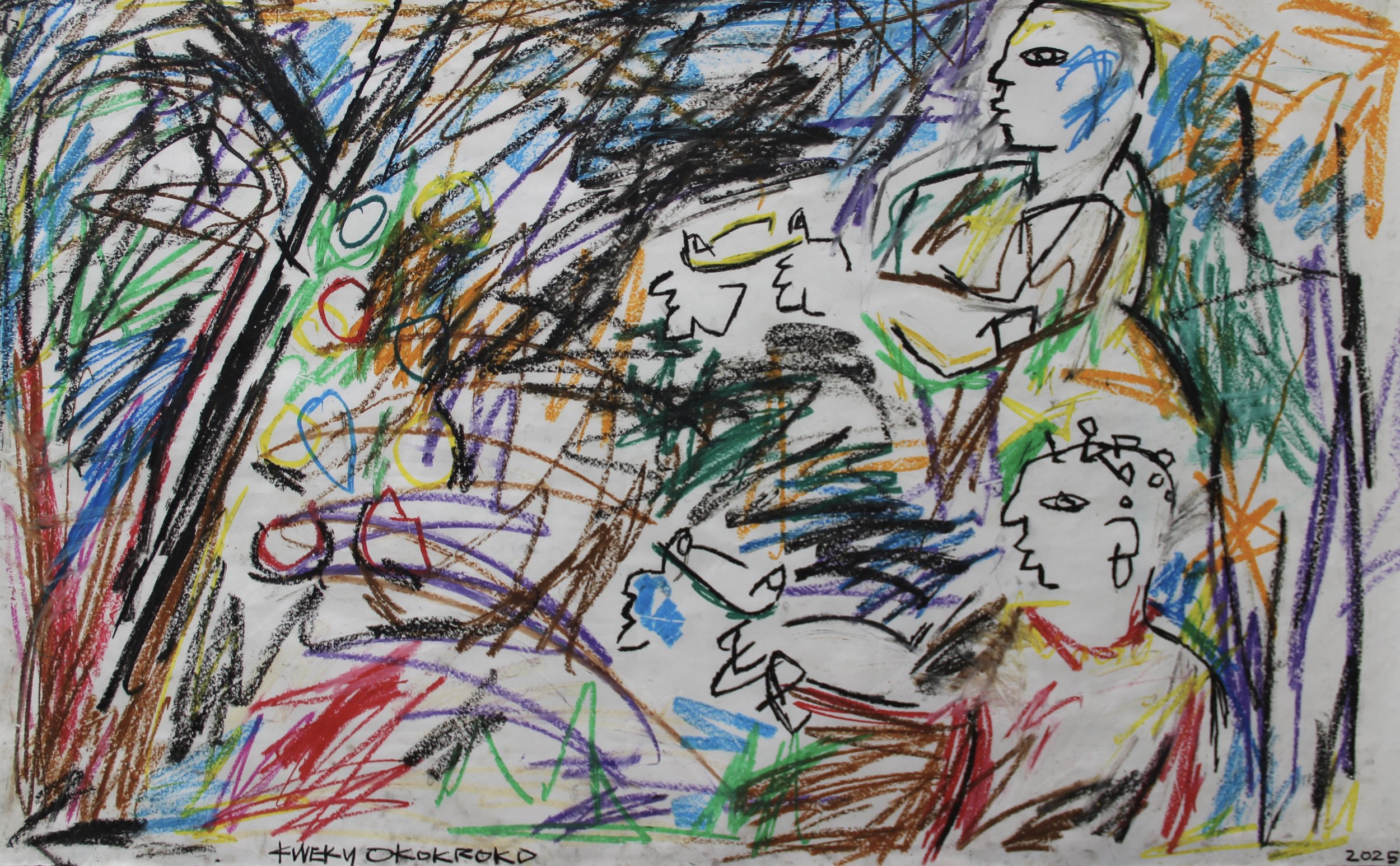
Aakpɔblɔ 190 x 120 cm 2025
AGRɔ
‘’Agrɔ’’ is a Twi word that translate in english to ‘’play/game’’.
This Agrɔ series of drawings is an ode to childhood play and games. Growing up in Ghana, where I was born and raised, we children would spend a lot of our time playing games of all kinds, some traditional to Ghanaian society others adopted from elsewhere.
Agrɔ as a body of work seeks to rewards interest in the relationship between play and cultural transfer, through addressing the role of play and games and its immense contribution to the formation and development of children in society.
On the basis that, the intricacies in the structure and administration of the play and games of any given society is also a revelation of its own self and true nature.
Through keen observation therefore of these plays and games, a wealth of understanding can be made available to oneself, regarding the values, virtues, moralities and nature of the people of the society.
Play is an integral part of childhood. It is the foundation upon which all principles are built.
‘’It is my belief that the truest nature of any given society is to be found in their plays and games, and that, after all, the most valuable gift any society can give a child is its play and games’’_ Kweku Okokroko
A good example would be to take, say, the popular U.S.American board game called '‘Monopoly’’.
This game gives valuable insight into the cultural sentiment and persuasion of the U.S.American in the socio-economic sphere. Which can be described as a money-accumulation-oriented, individualistic strife for material goods and property at the cost of others in society.
Individual ‘’success’’, as a measure of one’s worth in society, status and relative to one's standard of living. As a gauge of one's value in society.
This body of work is a retrospective, a pondering and a pilgrimage to this crucial period of childhood. With paper and oil stick in hand, in a bid to learn and understand from without, the beyond superficial relevance of play in childhood, and its rippling effects on our lives post childhood.
This series of drawings, inspect the function of play as a tool for creating experiences, teaching and indoctrination, through the probing of play, as it lays bare the psyche of whence it has come.